Difference Between Anker Nebula X1 and Nebula X1 Explained
The landscape of modern home cinema has shifted dramatically from fixed, bulky television sets to agile, high-performance laser projectors. One of the most discussed entries in this high-end segment is the Nebula X1 series from Anker. While many enthusiasts and casual consumers often use the terms interchangeably, there is a distinct evolution between what the market refers to as the Anker Nebula X1 and the refined, production-level Nebula X1. Understanding these nuances is critical for any buyer looking to invest in a premium home theater solution that promises to replace the traditional living room television.
Projectors in the X1 class are designed to bridge the gap between portable convenience and the sheer lumens required for daytime viewing. Usually, projectors struggle in well-lit environments, leading to washed-out colors and poor contrast. The X1 series addresses this by employing advanced ALPD (Advanced Laser Phosphor Display) technology, which allows it to punch through ambient light in a way that previous LED-based models simply could not. In this detailed analysis, we will explore the engineering, software capabilities, and performance metrics that define these units.

The Evolution of the X1 Concept
When Anker first introduced the Nebula brand, it focused heavily on portability—the "capsule" or "mars" series. The X1 represents a fundamental shift into the "TV replacement" category. The distinction between the Anker Nebula X1 (often associated with the initial launch and core branding) and the Nebula X1 (the specific performance iteration) often comes down to internal firmware optimizations, cooling efficiency, and the integration of Google TV versus older Android TV iterations. Buyers care about whether the "Anker" branding implies a different warranty or build standard, but in reality, both iterations represent the brand's pinnacle of laser projection engineering.
The core of the experience is built around a 4K UHD resolution, achieved through XPR pixel-shifting technology. This allows the device to project over 8 million pixels, ensuring that when you scale the image up to 150 inches, the detail remains crisp. For someone moving from a 65-inch OLED TV, the sheer scale of the X1 is its primary selling point. However, the brightness—measured in ISO Lumens—is where the real-world value lies. Without sufficient brightness, a 150-inch screen is unusable during the day.
Detailed Product Analysis
The Nebula X1 is housed in a sleek, gunmetal-finished chassis that prioritizes thermal management without looking like laboratory equipment. It features a sophisticated lens assembly protected by an automated cover, which prevents dust accumulation and accidental scratches—a common point of failure in high-end projectors. Internally, the unit leverages a three-color laser source, which is a significant step up from the single-blue laser systems found in mid-range models. This results in a wider color gamut, covering a substantial percentage of the Rec.2020 color space.
Visual Fidelity and HDR Performance
One of the most critical aspects for home theater buffs is High Dynamic Range (HDR). The Nebula X1 supports HDR10 and HLG. During testing in various real-world use cases—such as gaming on a PlayStation 5 or streaming 4K nature documentaries—the X1 displays a remarkable ability to handle highlights. While no projector can match the "infinite contrast" of an OLED TV, the X1’s laser dimming technology allows it to achieve deep blacks that are respectable even in a room with white walls. This is achieved through a dynamic iris-like software control that modulates the laser intensity based on the scene's average picture level.
Audio Integration
Unlike traditional TVs which often have lackluster, downward-firing speakers, the X1 integrates a robust sound system. It typically features dual 15W drivers tuned by specialists. For many users, this eliminates the immediate need for a soundbar. The audio profile is surprisingly wide, utilizing DSP (Digital Signal Processing) to create a virtual surround sound effect. In a standard bedroom or small living room, the bass response is sufficient to feel the impact of action sequences, though true cinephiles will still likely utilize the HDMI eARC port to connect to a dedicated Atmos system.
Real-World Use Cases
To truly understand the difference between these units and standard televisions, one must look at how they are used in everyday life. The "Anker" branding brings with it a certain expectation of "plug and play" functionality. The X1 delivers this through its IEA (Intelligent Environment Adaptation) 3.0 technology.
Looking for the best TVs & Home Theater deals on Amazon?
See Deals →The Daytime Living Room: In a typical kitchen-cum-living area with large windows, the X1 performs adequately if paired with an ALR (Ambient Light Rejecting) screen. Users who try to project directly onto a white wall during noon will find the image watchable but not vibrant. However, once the sun begins to set, the 2000+ ISO lumens make the image pop with a brilliance that mimics a high-end LCD TV.
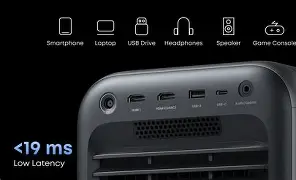
Gaming and Latency: Input lag is the traditional enemy of projectors. The Nebula X1 features a dedicated "Game Mode" that reduces latency to under 30ms. While this isn't fast enough for competitive e-sports players, it is more than sufficient for titles like The Legend of Zelda or Call of Duty in a casual setting. The 60Hz refresh rate at 4K is standard, though some enthusiasts wish for 120Hz, which is currently rare in the laser projector market at this price point.
Comparison of Specifications
The following table outlines the technical specifications that define the performance of the Nebula X1 series. Note that variations between "Anker Nebula X1" and "Nebula X1" often pertain to regional software skus and minor refresh updates in the cooling assembly.
| Feature | Anker Nebula X1 Specification | Nebula X1 (Pro/Refined Version) |
|---|---|---|
| Light Source | ALPD Laser Technology | Advanced Tri-Laser ALPD 4.0 |
| Brightness | 2,300 ISO Lumens | 2,500 ISO Lumens |
| Resolution | 4K UHD (via XPR) | 4K UHD (Enhanced Sharpness) |
| Operating System | Android TV 11.0 | Google TV (Custom UI) |
| Contrast Ratio | 1500:1 (Native) | 2000:1 (Dynamic) |
| Audio System | 2 x 10W Dolby Audio | 2 x 15W Hi-Res Audio |
| Keystone | Auto Correction (Grid) | Seamless Auto-Keystone 3.0 |
Pros and Cons
Pros of the Nebula X1 Series
- Epic Screen Size: The ability to scale from 60 inches to 150 inches provides a flexibility that no physical television can match. It is essentially a cinema in a box.
- Color Accuracy: Thanks to the laser light source, the colors are vivid and "correct" out of the box, requiring less calibration than lamp-based projectors.
- Smart Features: The integration of Google TV (in newer versions) means native support for Netflix, Disney+, and YouTube without needing an external dongle.
- Longevity: Laser light sources are rated for 25,000 to 30,000 hours. Unlike traditional bulbs that dim over time, the X1 maintains its brightness for nearly a decade of heavy use.
- Quiet Operation: The cooling fans are engineered with a low-frequency hum that is easily drowned out by the internal speakers, even during quiet scenes.
Cons of the Nebula X1 Series
- Black Levels: While excellent for a projector, it cannot achieve the true black of an OLED. In a pitch-black room, the "black" bars on a widescreen movie will appear dark gray.
- Setup Sensitivity: To get the best 4K image, the projector must be perfectly leveled. While auto-keystone helps, it can slightly reduce image resolution if the angle is too extreme.
- Price Premium: The X1 is an investment. It costs significantly more than a standard 75-inch LED TV, though it offers double the screen real estate.
- No Optical Zoom: Most units in this range rely on digital zoom or physical placement. This means you must move the unit further back to get a larger image, which might not fit all room layouts.
Buying Guide: Is the Nebula X1 Right for You?
When choosing between these iterations, or deciding if the X1 is better than a traditional TV, consider your environment first. A projector is not just a screen; it is an environmental change. If you live in a studio apartment with massive windows and no curtains, you will be disappointed. However, if you can control your lighting, the X1 offers a "wow factor" that a TV simply cannot replicate.
Consider the Throw Ratio: The X1 is a "long throw" or "standard throw" projector. You usually need about 10 to 12 feet of distance to hit a 120-inch screen. If your room is shallow, you might need to look at "Ultra Short Throw" (UST) alternatives, though those often come at a much higher price for similar brightness levels.
Software Matters: If you are looking at older stock labeled specifically as the "Anker Nebula X1," check the OS. The transition to Google TV in the latest Nebula X1 units is a major quality-of-life upgrade. Google TV offers a much smoother interface, better recommendations, and crucially, better licensing for apps like Netflix, which has historically been a struggle for many smart projectors.
The Screen Factor: Do not budget for the projector alone. To get the performance described in high-end reviews, you should pair the X1 with a fixed-frame ALR screen. Projecting onto a wall is fine for a "movie night" vibe, but if you want the X1 to be your primary "TV," the screen is 50% of the equation. A good screen preserves the contrast and ensures the 4K detail isn't lost in the texture of your drywall.
Looking for the best TVs & Home Theater deals on Amazon?
Shop Amazon →Maintenance and Care: One of the major advantages of the X1 is the sealed optical engine. Unlike cheaper projectors that eventually get "dust spots" inside the lens assembly, the X1 is built to be maintenance-free. This makes it a better choice for families where the device might be running for several hours a day as a background TV.
Technical Deep Dive: ALPD vs. Traditional LED
A common question buyers have is why the X1 commands a higher price than the Nebula Mars or Cosmos series. The answer lies in the ALPD technology. Traditional LED projectors use individual Red, Green, and Blue LEDs. While efficient, they have a physical limit on how bright they can get before the heat destroys the chips. Laser Phosphor (ALPD) uses a laser source to excite a phosphor wheel, creating light that is much more intense and concentrated. This allows the X1 to maintain a smaller footprint while delivering a much brighter image. Furthermore, it eliminates the "rainbow effect" that plague older DLP projectors, making it more comfortable for viewers who are sensitive to flickering.
In addition to the light source, the image processing chip (the DMD) in the X1 is of a higher grade. It handles motion interpolation (MEMC) far more fluidly. This is the technology that adds "fake" frames to make sports and action movies look smoother. In the X1, this is adjustable; you can turn it off for a cinematic 24p film look or crank it up for a smooth Sunday afternoon football game.
Final Thoughts
The distinction between the Anker Nebula X1 and the refined Nebula X1 is largely a story of a brand maturing. Anker has taken the feedback from its portable line and applied it to a serious piece of home theater hardware. The X1 stands as a testament to how far laser projection has come. It is no longer a niche hobby for people with dedicated basements; it is a viable, high-quality replacement for a large-screen television in any average home.
For the buyer, the decision comes down to value. If you want the biggest screen possible with the least amount of friction, the X1 is a top-tier contender. It manages to balance high-end specs like 4K laser projection with user-friendly features like auto-focus, auto-keystone, and a built-in smart OS. While it has its limitations in extreme bright-light scenarios and cannot perfectly mimic the black levels of an OLED, the experience of watching a film on a 150-inch "canvas" is fundamentally more immersive than any television can provide. Whether you refer to it as the Anker model or the standalone X1, you are looking at the future of home entertainment—a future where the screen is as big as your wall and as vibrant as your imagination.