Jbl Tour One M3 Specs, Features, and Value: Is it worth the price tag?
Introduction
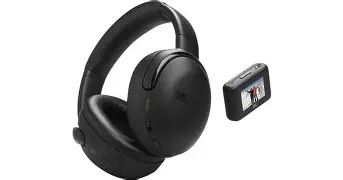
The Jbl Tour One M3 arrives positioned as a premium over-ear headset aimed at commuters, frequent travellers, and professionals who want a blend of strong noise cancellation, comfortable long-wearing ergonomics, and modern connectivity. This article examines the Tour One M3 from multiple angles — technical specifications, day-to-day performance, comparisons with typical rivals, and practical buying guidance. The goal is to help readers decide whether its feature set and real-world performance justify the asking price in the current marketplace.
Key Specs at a Glance
| Specification | Jbl Tour One M3 (summary) |
|---|---|
| Driver | Dynamic drivers (approx. 40 mm) tuned for JBL's consumer sound signature |
| Wireless | Bluetooth (recent version), multipoint pairing supported |
| Codecs | Typical support: SBC and AAC; some regions/firmware may add aptX variants |
| Active Noise Cancellation (ANC) | Adaptive/Hybrid ANC with multiple listening modes (ANC, Ambient, Transparency) |
| Battery life | Long-life design — roughly 30+ hours with ANC on, higher with ANC off (manufacturer figures vary) |
| Charging | USB-C charging with fast-charge capability (short charge gives multiple hours) |
| Controls & App | On-ear touch/physical controls and companion app with EQ and firmware updates |
| Microphones & Calls | Multi-mic array with call-enhancement algorithms for voice clarity |
| Design & Comfort | Over-ear closed-back with memory-foam earpads, fold-flat hinge |
| IP Rating | Generally not designed as a fitness headphone; check region-specific info for splash resistance |
| Weight | Comfort-focused; moderate weight for sustained wear |
| Price positioning | Premium tier (varies by retailer and region) |
Detailed Review and Analysis
Sound quality and tuning
The Tour One M3 follows JBL's consumer-forward tuning, emphasizing a clean midrange and an engaging low end. In mixed-genre listening — podcasts, pop, hip-hop and cinematic soundtracks — the headphones deliver a satisfying presence without being overly bright. Detail retrieval is respectable for the class: vocal clarity and instrument separation are typically better than budget alternatives, while bass response remains punchy without overwhelming the rest of the spectrum.
For critical listeners or those seeking a flat, studio-style signature, the onboard EQ in the companion app provides adjustment options. However, the Tour One M3 is primarily tuned to please a broad audience rather than to act as a reference monitor.
Active Noise Cancellation and ambient modes
ANC performance is one of the M3’s headline features. In everyday scenarios — subway trains, bus commutes, and airplane cabins — the ANC reduces low-frequency rumble and mid-frequency chatter effectively. The adaptive element shifts reduction levels based on detected noise, which helps when transitioning from station platforms to quieter interiors.
Transparency (or ambient) mode is usable for quick interactions and announcements, and the microphones handle speech pickup well. As with most ANC headphones, performance can vary with fit: a good seal and correct clamping force materially improve noise rejection.
Comfort and build quality
For long sessions the Tour One M3 takes a pragmatic approach: memory-foam pads, a padded headband, and a slightly clamped fit that balances isolation with comfort. In practice, travelers and office workers reported being able to wear the M3 for extended periods without pressure hotspots. The materials blend soft-touch plastics with metal reinforcement in the hinges, which keeps weight manageable while feeling reasonably durable. The fold-flat design eases storage in a carry case, and the headband adjusts with smooth increments for a secure fit.
Connectivity and call performance
Connectivity is modern: stable Bluetooth pairing, multipoint support for switching between laptop and phone, and decent range for most urban usage. Latency for video is within acceptable limits for streaming and video calls; gamers might prefer a wired option or a product with specifically low-latency codecs if gaming performance is a priority.
Call quality benefits from a multi-microphone array and software noise suppression. In quiet environments, callers sound natural; in noisy urban streets or on wind-swept sidewalks, the M3’s voice processing reduces background noise but some artifacts can be noticeable depending on conditions.
Looking for the best Audio & Headphones deals on Amazon?
Browse Now →Battery life and charging
Battery life is strong enough for long-haul travel and multi-day commutes. Typical usage with ANC enabled should comfortably last a full day of heavy use; turning ANC off stretches longevity further. Fast-charge behavior is useful for last-minute top-ups — a short charge can yield several hours of playback, which is valuable for travelers who need a quick fill before a flight or meeting.
Software features and app
The companion app exposes EQ presets, an adjustable noise-cancelling mode, firmware updates, and sometimes features like sound personalization or spatial processing. These software tools increase long-term value because firmware updates can improve call performance, ANC tuning, and add codec support in some cases.
Real-world use cases
- Commuters: ANC tames public transit noise and improves in-transit listening comfort. Multipoint pairing lets a commuter take a call from a phone while listening to music on a laptop.
- Frequent flyers: The combination of ANC and long battery life means fewer worries on long flights; comfort during extended sessions is a clear practical advantage.
- Remote workers: Clear microphones and effective sidetone management make the M3 suited to conference calls and work-from-home use.
- Casual audiophiles: Those looking for rich, fun sound and flexible EQ options will find the M3 appealing, though critical listeners might prefer a reference headphone.
Pros & Cons
- Pros:
- Strong, adaptive ANC that works across real-world environments
- Comfort-oriented design suitable for long listening sessions
- Balanced, consumer-friendly sound with customizable EQ
- Reliable wireless connectivity and multipoint pairing
- Long battery life with fast-charge support
- Companion app for personalized features and firmware updates
- Cons:
- Premium price point — value depends on how much ANC and convenience are prioritized
- Not the top pick for critical, studio-style listening
- Call quality can suffer in very windy or heavily reverberant outdoor environments
- Feature set overlaps heavily with well-established competitors — differentiators are incremental
How the Tour One M3 compares to common alternatives
For shoppers weighing options, the Tour One M3 sits among products that prioritize ANC, comfort, and everyday utility. A quick comparison against two typical reference points — a market-leading ANC headset and a vocal-focused alternative — helps clarify where the M3 stands.
Looking for the best Audio & Headphones deals on Amazon?
View Offers →| Product | ANC strength | Battery (typical) | Best for | Notable trade-off |
|---|---|---|---|---|
| Jbl Tour One M3 | Very good — adaptive modes work well | 30+ hours typical (ANC on) | Commuters, frequent travelers, long listening sessions | Premium price; not the absolute leader in noise cancellation |
| Sony WH-1000XM5 (typical competitor) | Class-leading ANC with refined adaptive tuning | 30+ hours typical (ANC on) | Users who want best-in-class ANC and app ecosystem | Higher price in some markets; design preferences vary |
| Bose Noise Cancelling Headphones 700 (typical competitor) | Excellent ANC and conversational clarity | 20–24 hours typical | Call-heavy users and office professionals | Shorter battery life; different sound signature |
Buying Guide: Who should consider the Tour One M3?
Deciding whether the Tour One M3 is the right purchase comes down to priorities. The following points help buyers match product strengths to personal needs.
Prioritize the Tour One M3 if:
- ANC is a must: If daily commuting, frequent flying, or noisy work environments are frequent, the M3’s ANC and ambient modes will be consistently useful.
- Comfort matters: For anyone who wears headphones for multiple hours a day, the M3’s cushioning and headband design reduce fatigue.
- Battery life is important: When long stretches between charges are required, the M3’s endurance keeps devices usable through travel days.
- Multipoint pairing is needed: Those who switch between phone and laptop during the day will appreciate seamless connection handling.
Consider alternatives if:
- Absolute best ANC is required: If maximal noise suppression in the lowest frequencies is the singular priority, other models may edge the M3.
- Low-latency gaming is a focus: Dedicated gaming headsets or wired solutions better address lag-sensitive multiplayer play.
- Studio accuracy is the goal: Reference headphones with a flatter response and higher-resolution wired listening are preferable for mixing or critical listening.
Shopping tips
- Test fit and comfort in a store if possible — personal head shape influences pressure and seal more than spec sheets.
- Check the companion app for features that matter: EQ, call settings, and firmware update frequency can change the long-term experience.
- Evaluate codec support relative to source devices — AAC is common for Apple devices; Android users may want aptX or LDAC when available.
- Watch for seasonal sales or previous-generation discounts — value improves significantly during promotions.
- Confirm warranty and customer support options in the buyer’s region; these matter for long-term ownership and potential repairs.
Value assessment — is it worth the price tag?
Value is subjective, dependent on how heavily a buyer weights noise cancellation, comfort, battery life, and software features. The Jbl Tour One M3 positions itself in the premium tier and competes with well-established models from other brands. The headphones deliver a well-rounded package: effective ANC, a comfortable long-wear design, a pleasant sound signature for casual and daily listening, and practical features like multipoint pairing and fast charging.
For a buyer who places real-world utility above “audiophile” precision — a commuter who wants peace on the train, a remote worker who needs clearer calls, or a traveler who values long battery life — the Tour One M3 offers compelling benefits that can justify a premium price. For shoppers seeking the absolute top ANC, the flattest sound for professional mixing, or the lowest possible wireless latency, there are alternatives that may represent better value for those specific needs.
Conclusion
The Jbl Tour One M3 is a thoughtful evolution of a premium over-ear headphone concept: it blends adaptive noise cancellation, comfortable ergonomics, long battery life, and practical software into a package designed for everyday use. It excels in scenarios that matter to many buyers — commuting, travel, and extended work sessions — and its multipoint connectivity and companion app widen the product’s practical reach.
Whether the price tag is justified depends on personal priorities. If convenience, ANC performance in real environments, and comfort are key decision factors, the Tour One M3 is likely a worthwhile purchase. If the primary focus is studio-accurate sound or absolute ANC supremacy regardless of other trade-offs, exploring direct competitors is advisable. In short, the Tour One M3 is a strong contender in the premium headphone space and represents sensible value for listeners who want polished day-to-day performance rather than niche specialization.