The Truth About the Huntsman V2: Pros, Cons, and Verdict
Introduction
The Huntsman V2 is Razer’s modern take on a performance-focused mechanical keyboard, positioned for gamers and power users who prioritize speed, responsiveness, and a premium typing experience. Over recent generations, the Huntsman line established itself by adopting optical actuation and a gaming-first feature set. The V2 iteration promises refinements in acoustics, stabilizers, and overall build quality. This article examines what the Huntsman V2 actually delivers in everyday use: how it feels, how it behaves under gaming and productivity loads, and whether it represents good value compared with common alternatives.
Detailed Review and Analysis
Design and Build Quality
At first glance, the Huntsman V2 presents a familiar premium keyboard silhouette: a solid top plate, clean bezel, and a layout that leans toward a gamer aesthetic without being overly flashy. The chassis typically uses metal or dense plastic for rigidity, and the overall construction minimizes flex under normal typing pressure. For buyers who move a keyboard between a desk and a LAN event, the build feels confidence-inspiring without reaching the weight of some enthusiast custom boards.
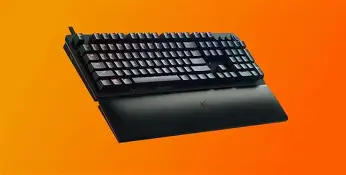
Razer has focused attention on practical touches: a low-profile cable exit, angled feet with multiple height settings, and a detachable or comfortable wrist rest on full-size variants. The finish is durable and resists fingerprints better than glossy plastics often found on budget boards.
Switches and Typing Experience
The core of the Huntsman series is its use of optical actuation switches rather than traditional mechanical switch contacts. Optical switches use a light-based actuation mechanism that can reduce debounce issues and offer very low latency. The V2 typically ships with either linear or tactile optical switches, and users can expect a crisp, consistent keypress with very fast registration — an attribute especially valued in fast-paced gaming where every millisecond counts.
For typists, linear optical switches can feel smooth and swift but may lack the tactile feedback some prefer for heavy typing workloads. Conversely, tactile optical options provide a discernible bump that helps with accuracy during extended typing sessions. The Huntsman V2 tends to be tuned toward a relatively short actuation and a snappy return, which benefits gamers and hybrid users who switch between gaming and productivity.
Stabilizers, Keycaps, and Acoustics
One of the notable refinements in the V2 model is attention to stabilizers and sound dampening. Stabilizer tuning reduces the rattle and unevenness often heard on larger keys (spacebar, enter, shift). Razer’s implementation in the V2 reduces ping and creates a more refined acoustic profile. Combined with internal foam dampening, the result is a quieter, less hollow sound compared with earlier Huntsman models and some competitor boards.
Keycaps on the Huntsman V2 are usually double-shot PBT or high-quality ABS options depending on the variant. PBT keycaps offer a textured, durable surface that resists shine over time and appeals to users who type a lot. Legends tend to remain crisp and don’t wear quickly, an important consideration for buyers who expect long-term use.
Shop the latest Electronics picks on Amazon.
See Deals →Layout, Media Controls, and Extras
Layout options include full-size with numpad and tenkeyless (TKL) variants; there are also compact options in the larger Huntsman family. Dedicated media controls or a multifunction dial may appear depending on the model, providing convenient volume and playback control without needing to use software. For users who rely on quick-access media controls — streamers, content creators, office workers — physical media controls are often a decisive feature.
Software and Customization
The Huntsman V2 integrates with Razer’s Synapse software for macro programming, per-key RGB lighting customization, and profile management. Synapse allows layering profiles for games and applications, customizable lighting effects, and macro assignment. While Synapse is powerful, some users find it heavier than minimalist configuration tools used by other brands. For buyers who want extensive software-driven customization and cloud profile syncing, Synapse is an advantage; for those who prefer on-board memory and lightweight apps, this might be less appealing.
Gaming Performance
In gaming, the Huntsman V2’s fast actuation and stable key registration show clear benefits. Fast-paced shooters and action titles benefit from the optical switches’ short actuation distance and minimal latency. Players who use rapid key presses, double-tapping, or need instant responsiveness during tournaments will notice the difference versus more traditional mechanical keyboards. Macro reliability and per-profile customization also help gamers who need specialized keybinds for MMOs and MOBAs.
Productivity and Everyday Use
For everyday productivity—programming, writing, spreadsheet work—the Huntsman V2 performs adequately. The short actuation and crisp response can increase typing speed for those who adapt to it, though some heavy typists might find the lack of a pronounced tactile travel (on linear variants) reduces typing comfort over long sessions. The refined acoustics and PBT keycaps make it suitable for shared workspaces where a quieter keyboard is appreciated.
Durability and Maintenance
Razer’s optical switches and improved stabilizers contribute to a keyboard that can withstand hours of daily use. The materials used in the V2 are chosen to minimize wear, and keycaps can often be swapped if users want to customize further. Maintenance is straightforward: keycap removal for cleaning is standard, and the solid case construction means there are fewer gaps where debris can accumulate compared with open-frame designs.
How the Huntsman V2 Compares (Quick Table)
| Feature | Huntsman V2 | Huntsman Elite (previous generation) | Typical Competitor (e.g., Corsair K70) |
|---|---|---|---|
| Switch Type | Optical switches (linear or tactile options) | Optical switches (older tuning) | Mechanical (Cherry or proprietary) |
| Keycaps | High-quality PBT / double-shot options | ABS or PBT depending on SKU | Doubleshot ABS or PBT (varies) |
| Acoustics | Improved dampening and tuned stabilizers | Less dampening, louder profile | Varies; generally similar with foam mods |
| Software | Razer Synapse (extensive customization) | Razer Synapse | iCUE (comparable feature set) |
| Best for | Gamers seeking fast actuation; hybrid users | Early adopters of optical tech | Users wanting broad switch options and accessories |
| Price tier | Premium | Premium | Premium to mid-premium |
Pros & Cons
Pros
- Very fast, consistent actuation — optical switches reduce latency and deliver consistent key registration for gaming.
- Refined acoustics — improved stabilizers and internal dampening make the board quieter and more pleasant to use long-term.
- Durable keycaps — PBT or high-quality keycaps resist shine and feel substantial under the fingers.
- Solid build quality — a rigid top plate and thoughtful ergonomics provide a premium feel.
- Extensive customization — Synapse software offers detailed macro and RGB control for users who want it.
Cons
- Software dependency — Synapse can be resource-heavy and some users must rely on it for advanced customization.
- Switch preference — the optical feel is not for everyone; some typists prefer traditional mechanical switches with different tactile feedback.
- Price — the premium positioning makes it a relatively expensive option compared with entry-level mechanical keyboards.
- Limited on-board configuration — while profiles are often available, full customization without software can be limited depending on the SKU.
Buying Guide: Who Should Consider the Huntsman V2?
Choosing a keyboard is a personal decision that depends on use case, budget, and preference for switch feel. The Huntsman V2 is particularly suited to the following buyers:
Discover deals on Electronics — updated daily.
View Offers →- Competitive gamers who prioritize short actuation and immediate key registration. The optical switches and tuned response help in fast-reaction titles.
- Hybrid users who switch between gaming and productivity and want a single keyboard that handles both with good durability and quiet acoustics.
- Users who want premium out-of-box experience — good switch tuning, quality keycaps, and a confident build make the V2 feel like a finished product rather than a value compromise.
What to Consider Before Buying
- Switch preference: Determine whether linear or tactile actuation better matches typing style. If possible, try both switch types in person or listen to sound tests from trusted reviewers.
- Keyboard size: Decide if a full-size board with numpad, a TKL, or a compact layout fits the workflow. Gamers who use keybind-heavy MMOs might prefer a full-size board; esports players sometimes prefer TKL for mouse space.
- Software and privacy: If relying on manufacturer software is a concern (e.g., for telemetry or cloud syncing), check whether the board supports on-board profile storage or can be used effectively without the app.
- Noise level: If using the keyboard in shared environments like an office, choose dampened variants or PBT keycaps to reduce disruptive sound.
- Customization needs: Consider macro availability, per-key lighting, and whether the keyboard supports key remapping that will be used frequently.
- Budget: Set a realistic ceiling for how much the keyboard should cost. The Huntsman V2 sits in the premium tier; compare with competitor models and factor in long-term durability.
Alternatives Worth Considering
Buyers should evaluate similar premium keyboards from other manufacturers if the Huntsman V2’s optical switch focus does not align with preference. Popular alternatives include models with traditional mechanical switches, compact form factors, or lighter software footprints. When comparing, consider switch type, keycap material, media control layout, and warranty/support policies.
Real-World Use Cases
Understanding real-world scenarios helps translate specifications into practical advice:
- Esports and competitive play: Players who need rapid inputs and repeatable actuation will appreciate the low-latency feel. Tournament players may prioritize actuation and reliability over additional lighting features.
- Content creation and streaming: Streamers benefit from a reliable keyboard with customizable macros and media controls to manage scenes and audio without switching windows.
- Office and remote work: Professionals who type a lot and share spaces will value the quieter acoustic profile and durable keycaps. However, they should evaluate whether the switch feel matches comfort for long typing sessions.
- Software developers: Developers who alternate between coding and gaming will find the Huntsman V2 capable, but some may prefer more tactile switches for long coding stretches.
Verdict and Conclusion
The Huntsman V2 is a compelling offering for buyers who care about speed, refined acoustics, and a premium build. It leans toward gamers and hybrid users who appreciate optical switch responsiveness and durable keycaps. Improvements in stabilizers and dampening make it better suited to shared environments than previous Huntsman iterations, and Synapse gives users an extensive customization toolkit.
That said, the V2 will not be the ideal choice for everyone. Typists who crave a heavy tactile bump or enthusiasts who prefer the nuanced variety of mechanical switch manufacturers may look elsewhere. The reliance on manufacturer software for the full feature set and the premium price tag are further considerations.
Overall, the Huntsman V2 should be regarded as a strong candidate in the premium keyboard space: it modernizes Razer’s optical approach with thoughtful refinements and delivers a balanced experience for gaming and everyday use. Buyers should weigh switch preference and budget, and, when possible, test the switch variant they expect to use most to confirm comfort and feel before purchasing.